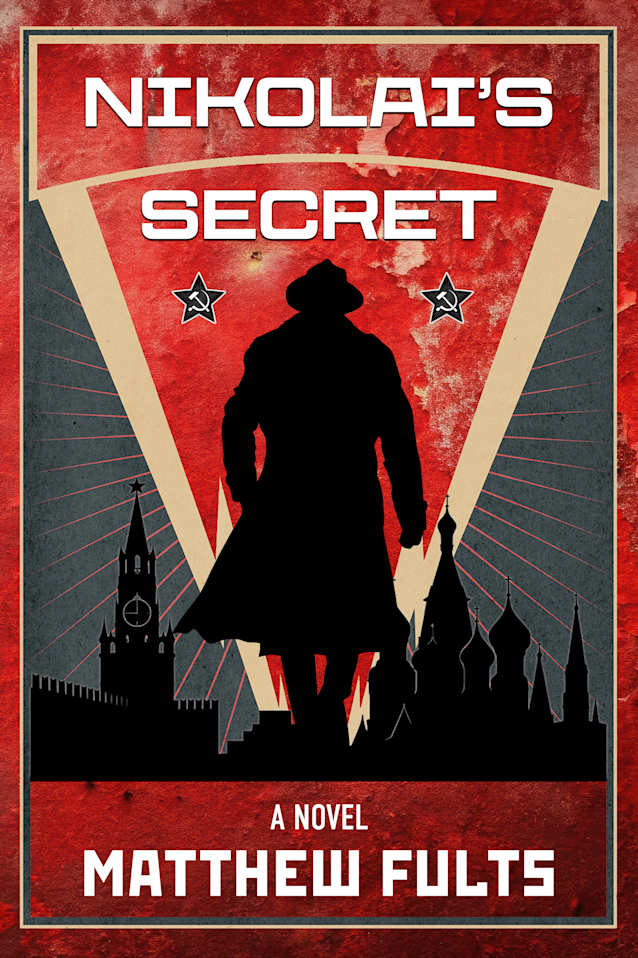
Nikolai's Secret
About
"Fults is a master of character-driven espionage..." – The Book Commentary
An ordinary man discovers a secret powerful enough to crumble an empire.
Behind the Iron Curtain, Nikolai Kovalenko lives an invisible life of obedience. Raised on Soviet ideals and quietly serving as an electronics technician for the Ministry of Communication, he never questions the system. Danger feels like someone else’s world, and he never imagines it could touch his own.
Until one routine day in February 1981 changes everything.
A secret never meant to be found. Where temptation leads to regret.
What Nikolai uncovers pulls him into the silent war brewing inside the Eastern Bloc, where power is traded behind closed doors and lives disappear without warning. As the Soviet empire begins to fracture and the Solidarity movement ignites rebellion in Poland, the choice is unclear: guard the secret and survive, or speak it and gamble everything, even his life.
Guided by the unlikely wisdom of his former history teacher, and torn between the woman he loves and the choice he made, Nikolai must out maneuver the ruthless East German Stasi in a desperate search for someone to unburden him.
From bestselling author Matthew Fults, Nikolai’s Secret is equal parts parable, caper and love story. It's a powerful companion novel to The Sunflower Widows, where inner courage and a moral compass are required passports to a future without a past.
Perfect for fans of John le Carré and Milan Kundera.
Praise for this book
"A compelling, cinematic, and intimate story..."
"Fults is a master of character-driven espionage..."
"Fults' novel distinguishes itself through its intimate, confessional narrative voice and its unflinching focus on the emotional collateral damage of Cold War maneuvering rather than techno thriller spectacle."
"The setting is meticulously rendered, from the cinder-block labs of the Brovary facility and the frost-encrusted train platforms of Soviet Ukraine to the stale cigarette smoke of Vitaly's office, and the author skillfully captures the tactile dread and sensory deprivation of the Eastern Bloc."